Bruges, Belgium: A Cultural Hub in Flanders
Current Weather

Description
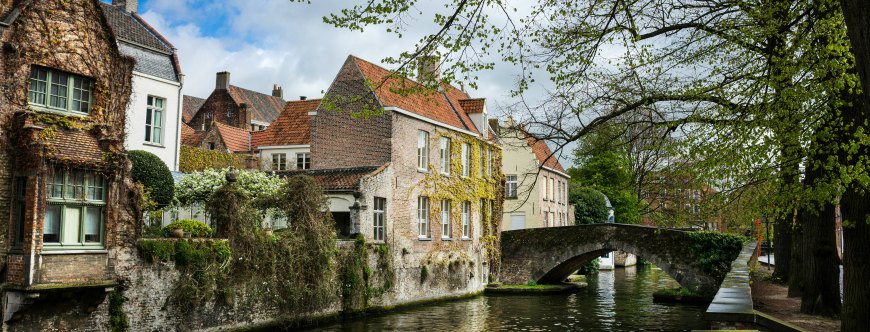
Although the Bruges region was already populated in Roman times, the city’s name appears for the first time in the 9th century, probably derived from the Old Germanic word ‘brugj’, which means ‘mooring’. Bruges has always had a special bond with the sea. After all, water played a crucial role in the city’s foundation. It was the place where several streams merged into a single river (the ‘Reie’), which flowed north into the coastal plain. This river was linked to the North Sea through a series of ‘tidal channels’, guaranteeing the city’s future welfare and prosperity.
Useful information
Inner city — 19,881 [2020] Greater Bruges — 118,610 [2020]
Euro €
112 — This free number is used in all member states of the European Union to contact the emergency services: police, fire brigade or medical assistance. The number operates 24/7.
Police
General telephone number: +32 50 44 88 44
Emergency police assistance: 101
Cafés and restaurants have no (fixed) opening hours. Sometimes they will remain open until the early hours of the morning and other days they will close earlier: it all depends on the number of customers.
Highlights of Bruges


Romantic Hotspots


Do & See


Events


Dining


Cafés, Bars & Nightlife


Shopping


Tourist Information


Frequently Asked Questions
The best time to visit Bruges is during the spring (April to June) or early fall (September to October) when the weather is mild and the crowds are smaller. Spring offers beautiful blooms and pleasant temperatures, while early fall provides a cozy atmosphere with fewer tourists.
A stay of two to three days is ideal for exploring Bruges. This allows you to visit major attractions like the Belfry of Bruges, the Basilica of the Holy Blood, and the Groeningemuseum, as well as enjoy leisurely strolls along the canals and sample local cuisine.
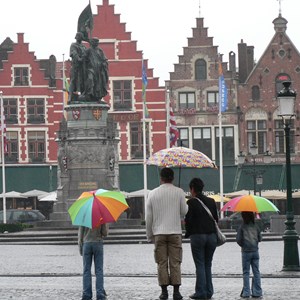
Bruges is renowned for its medieval architecture and charming canals. Must-see attractions include the Belfry of Bruges, the Markt square, the Basilica of the Holy Blood, and the Groeningemuseum. Don't miss a boat tour on the canals for a unique perspective of the city.
Bruges is a compact city best explored on foot or by bicycle. The city center is pedestrian-friendly, and renting a bike offers a convenient way to see more of the city and its picturesque surroundings. Public buses are also available for longer distances.
Bruges offers a variety of traditional Belgian dishes. Be sure to try moules-frites (mussels with fries), carbonnade flamande (beef stew), and local chocolates. For dessert, sample a Belgian waffle or speculoos, a spiced shortcrust biscuit.
Bruges hosts several cultural events throughout the year. The Bruges Beer Festival in February celebrates Belgian beer, while the Procession of the Holy Blood in May is a historical and religious event. The city also hosts the Cactus Festival, a music festival, in July.
Staying in the historic city center is recommended for first-time visitors to Bruges. This area offers easy access to major attractions, dining options, and charming streets. Accommodations range from luxury hotels to cozy bed and breakfasts, catering to various preferences.